


Today, the nonprofit sector is facing immense uncertainty. Many organizations are staring down financial cliffs, struggling with cultural and operational strain, and feeling a kind of pressure that is borderline existential. If you’re in leadership right now, you’re likely navigating one of the hardest chapters of your career.
As I’ve reflected on what it means to lead well in this moment, I realized that the most powerful lessons I’ve learned came from watching my partner’s work in disaster response and finding the parallels to my own.
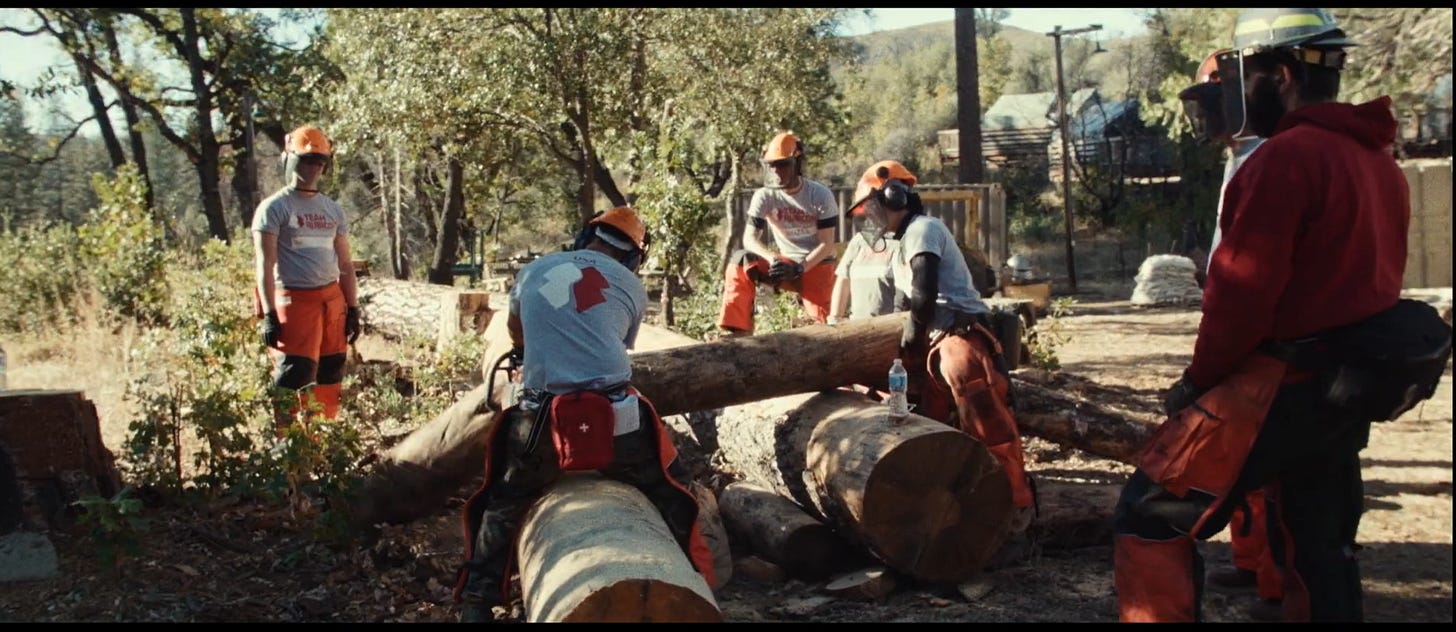
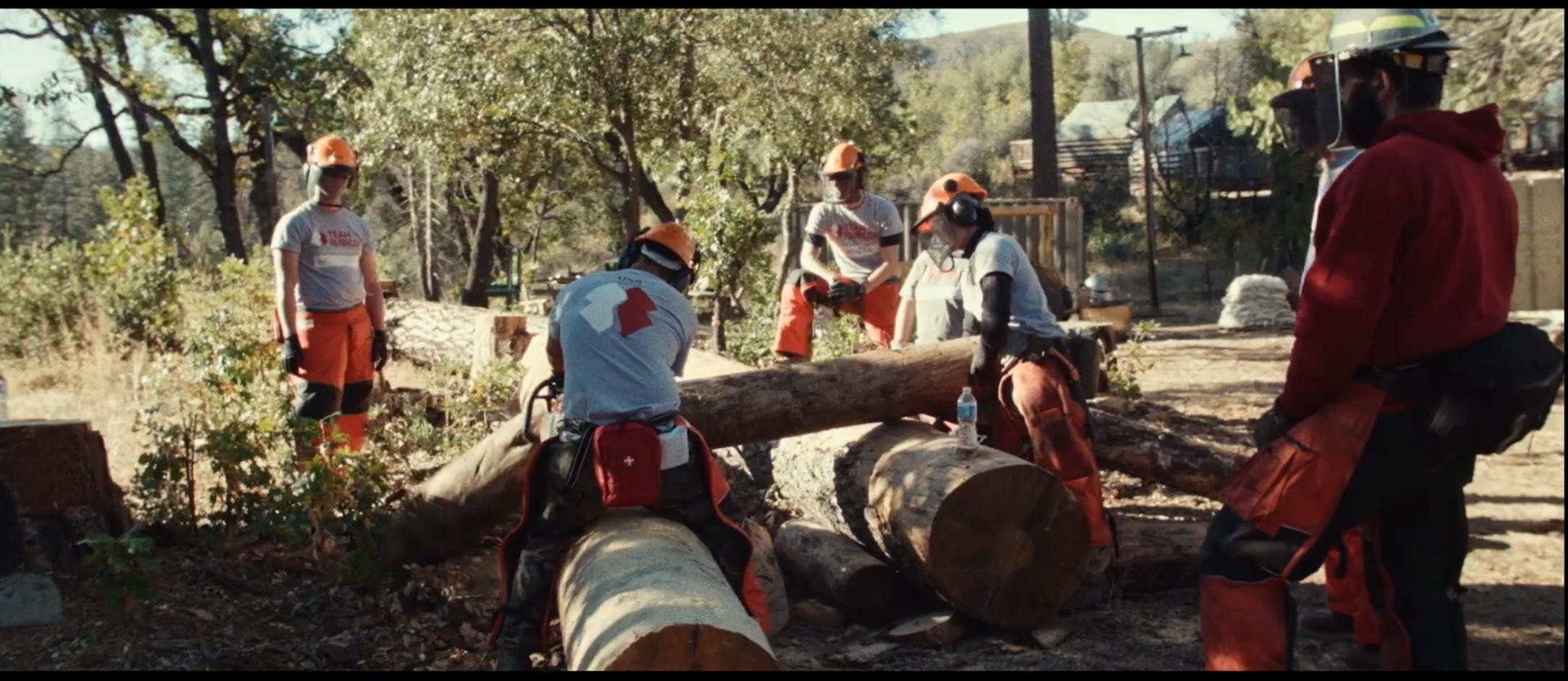
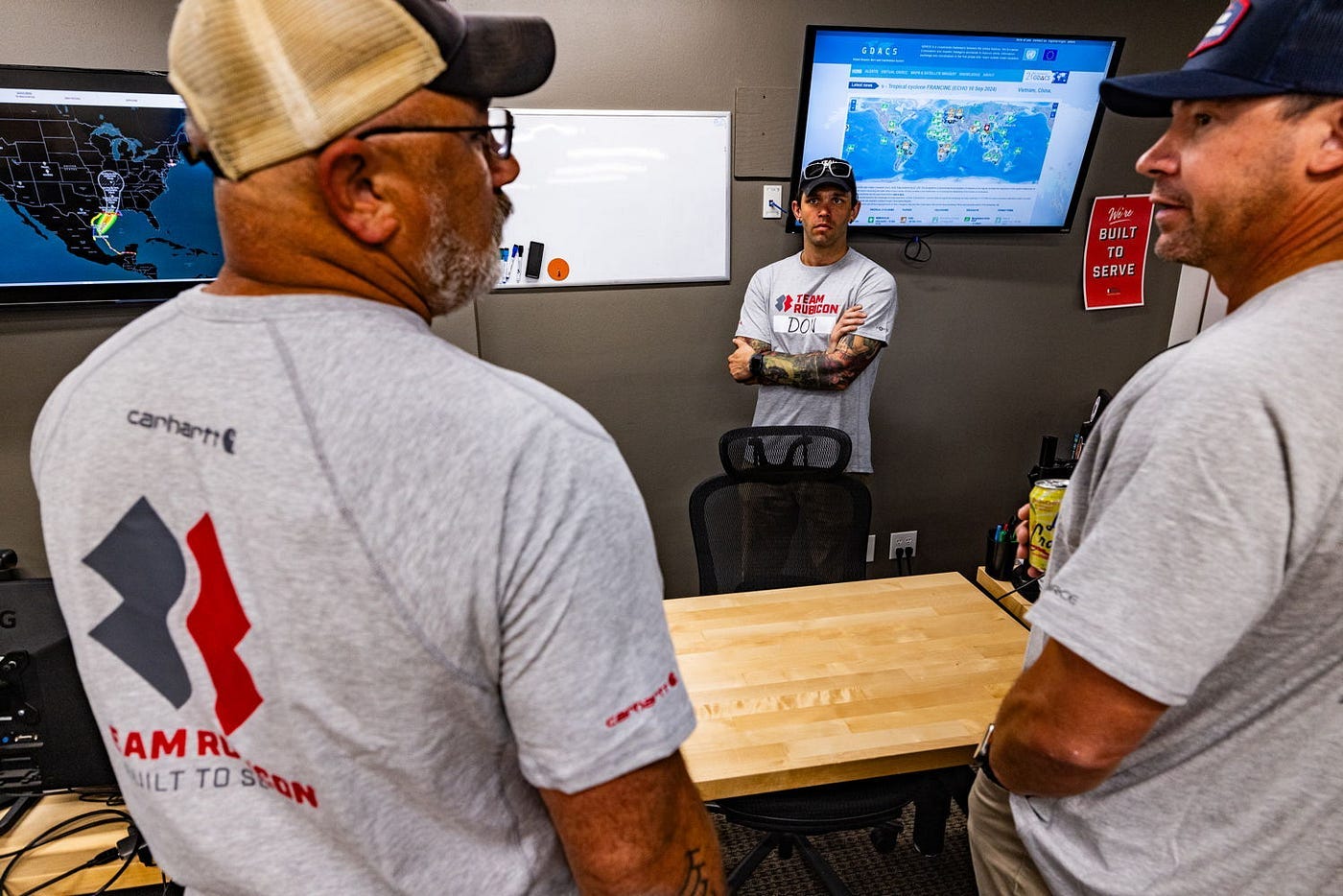
My partner, Don Beeson, works and volunteers with Team Rubicon, supporting responses to some of the most devastating crises of our time: leading the organizational response to Hurricane Helene’s floods in North Carolina, conducting on-the-ground risk assessments in Poland/Ukraine, planning long-term recovery for Hawaii after the wildfires. As I write this, he’s flying to Jamaica to lead a medical team delivering relief after Hurricane Melissa.
In each of these moments, he steps into high-stakes, emotionally challenging circumstances that would overwhelm many leaders. Yet again and again, his teams show up with compassion to support people facing some of the hardest days of their lives.
The crises I face as an interim executive look different. I step into organizations during executive transitions (mostly unplanned ones). Buildings may not be collapsing, but trust often is. Culture may be fracturing. Staff hurting. Systems struggling. The stakes are high in a different but no less real way: people’s livelihoods and the communities who depend on these organizations are on the line.
The external stakes are different, but the leadership demands? Shockingly similar.
I didn’t expect his work to inform mine. But watching him lead through disaster after disaster revealed something powerful: we’re doing the same work. We’re both leading people through profound uncertainty. We’re both making high-stakes decisions with incomplete information. We’re both holding space for grief and loss while moving toward recovery.
Here are the five lessons that have shaped both of us, that I carry into every leadership moment. Things I think could help you lead at your best when you’re standing in the thick of the worst.

1 | The Tone is set at the Top
In crisis, people don’t look at a strategic plan first… they look at you.
One of Don’s first tasks in any disaster response operation is deceptively simple: walk into the room and be steady. Crisis triggers our survival instincts. People stop processing words and start processing signals such as your tone, posture, and the pace of your breathing. Teams typically assume the leader has the most information and thus the clearest read on the situation. So if you look panicked, the group absorbs that panic. If you move with frantic urgency, the team escalates. If frustration shows, everyone starts reading danger signals where none exist.
In crisis, emotional discipline is the foundation upon which every other leadership action rests.
I see the same thing when I step into an interim role during a leadership transition. Staff are already on edge, uncertain about the future, worried about their jobs, bracing for what might come next. If I walk in frantic or overwhelmed, I pour fuel on that fire. But if I stay grounded and even, it can help people start to settle.
Bad behaviors
I’ve seen many well-intentioned leaders make things worse… not by making bad decisions but through bad presence. Certain behaviors can can amplify crisis, including:
Treating everything as urgent. Then nothing is prioritized.
Micromanaging to feel in control, which slows the team and erodes trust.
Reacting harshly or emotionally, signaling danger where none exists.
Going silent or withdrawing, which amps up confusion/fear.
Sending rushed or inconsistent messages, fueling speculation.
These aren’t character behaviors, mind you. They’re stress responses. But left unchecked, they just make a crisis harder.
How to Get it Right
Get Grounded. Taking a 10-second reset, whether it’s breathing exercises, a centering phrase, or a little ritual you create, can shift your nervous system and ready you to meet the room you’re about to walk into with calm.
Slow down. Your body language and vocal cadence can communicate more than your actual words. Rapid talking and rush movement can trigger feelings of alarm in others, whereas using a slower speech and controlled movements can signal safety/calm and help with regulation.
Use Clarity to Prevent Panic. Calm requires clarity. You don’t need all the answers to communicate well. Phrases like “Here’s what we know right now” or “Here’s what’s true, and here’s what we’re still learning” create transparency without feeding speculation.
Deliver Bad News in Person. Showing up signals that you own the decision or the moment, and are willing to face its impact alongside your team. It also gives you immediate feedback, allowing you to read the room, answer questions, and address concerns before speculation takes hold.
Find an Anchor. Every strong crisis leader needs a trusted partner (a colleague, mentor, or external peer) who can absorb their venting, hear their fears, offer perspective, and most importantly, help bring them back to center and remind them where hope still lives. Just because you have to be the face of calm doesn’t mean you are expected to feel that way all the time.
2 | A Time for Discussion and a Time for Decision
Good crisis leadership is not command-and-control styled. But it isnt consensus-seeking either. It is an art of knowing when to do each…. Too much discussion, and critical decisions stall. Too much unilateral action, and you risk misalignment, resistance, or harmful choices.
Don often describes disaster leadership as “a constant dance between listening, discussing, and deciding.” In the field, he gathers information from local leaders, aid partners, neighbors, elders, medical teams, and logistics officers…and then there’s a moment when he has to say:
“This is the plan, let’s move.”
Crisis narrows the available time window to act, but it doesn’t eliminate the need for conversation. In fact, the quality of your conversations will ultimately determine the quality of your decisions. The challenge is managing those conversations so they inform action rather than delay it.
I’ve learned this in my own work. When I step into an organization mid-crisis, there’s often a backlog of unmade decisions (things that have been circling for weeks because no one wanted to be the one to call it or own it). Part of my job is breaking through and moving the team forward.
Dodge these Dynamics
Under stress, I see teams fall into predictable patterns:
Circular debate, where conversation continues long after it stops adding value.
Decision deferral, due to fear of being wrong or upsetting people.
Over-reliance on consensus, especially when clarity is lacking and no one wants to own the call.
Authoritarian swings, where overwhelmed leaders make isolated decisions without input.
How to get it right
Your job as a leader is to shift the team between dialogue and direction while maintaining tempo.
Timebox Conversations. Not every issue can afford prolonged dialogue. Set boundaries: “We have an hour for input,” can help people focus. Adding a brief pause for reflection (“Take one minute to think before we share”) can dramatically improve the quality of contributions.
Define Decision Making Authority up Front. Teams need clarity on how the decision is being made and who is making it. Tell them explicitly which mode you’re operating in:
Consultative: “I will make the decision after hearing your input.”
Delegated: “You all are making this call; I’m here to support.”
Directive: “I am making this decision, but I want to understand the implications.”
This eliminates assumptions and frustration.
Never Leave without Action Items and Assignments. After a decision, conclude every meeting by writing down what you decided, who is doing what, and what comes next. This creates clarity and accountability.
Don’t crowdsource strategy. Strategy should be shaped by a focused leadership group…. not by a large open call for opinion or consensus. Team input is valuable, yes, but direction is your job. Crowdsourcing strategy is a quick path to analysis paralysis and loss of focus.
Use Provisional Decisions. You don’t need the perfect or permanent answer. In a crisis, you rarely can. Make a “right now” decision that creates momentum. E.g. “We’re choosing a direction for the next two weeks and will re-evaluate on this date.” This reduces the pressure of ‘getting it rights’ and builds in critical flexibility in an environment that is likely changing rapidly.
3 | Don’t come with the Answer / Lead with Curiosity
One of the fastest ways new leaders fail in crisis is by assuming that what worked before will work again. But disaster has its own story: its own culture, dynamics, history, and terrain… which means it needs it’s own solution.
When Don led operations in Haiti, the cultural dynamics, infrastructure challenges, and political context shaped their decisions. Those solutions didn’t translate to Poland, where the crisis centered on refugee displacement rather than collapsed buildings. And Poland’s lessons won’t cleanly apply to Jamaica. Each situation demands that leaders learn the landscape before they act.
The same is true for nonprofits in crisis. Each organization is its own ecosystem, with its own culture, operational and programmatic realities, community expectations, and funding pressures. That means a previous leader’s playbook probably won’t solve today’s problems. “Best practices” only work when adapted to local context. And what succeeded at one organization cannot simply be cut-and-pasted into another.
This is something I have to remind myself of constantly. When I step into an interim role, I bring years of pattern recognition… and that’s valuable. But it’s also dangerous. The moment I assume I know what’s happening before I’ve listened, I start solving the wrong problem. The leaders who fail fastest are the ones who arrive with answers already formed. Or worse, the ones who believe their experience guarantees they’re right.
Crisis leadership is inherently adaptive. You have to be skilled at reading context, not just applying formulas.
What’s going to get in the way of doing good work?
Coming in assuming you know the answer / you know best
Relying too heavily on past solutions
Ignoring local knowledge
Treating best practices as universal truths (instead of starting points).
How to get it right
Curiosity over Certainty. Curiosity keeps you from defaulting to old solutions or blind spots. Ask more questions than you think you need to. Assume there’s something you’re not seeing.
Look Local. Seek input from frontline staff, beneficiaries, partners, community members, and even skeptics. Local means People closest to the work often see the risks, patterns, and realities that leadership overlooks.
Get to know your biases. Be transparent about the instincts or assumptions you’re bringing from past experiences. Saying “I’m inclined to do X because of what I saw at my last organization… but I want to test that here” models humility and invites challenge.
Decisions as Drafts. Normalize iteration as good leadership. Treat initial decisions as drafts, not final answers. This approach enables teams to flexible and unafraid to adjust course as they learn.
4. It’s a Team Sport
The myth of the heroic leader is both seductive and dangerous.
When a leader tries to carry everything on their shoulders, to take on every decision or be the central problem-solver… they ultimately become a bottleneck. They miss critical information. They overestimate their capacity. They burn out. They compromise team safety.
Disaster response only works when the leader pushes leadership outward and downline.
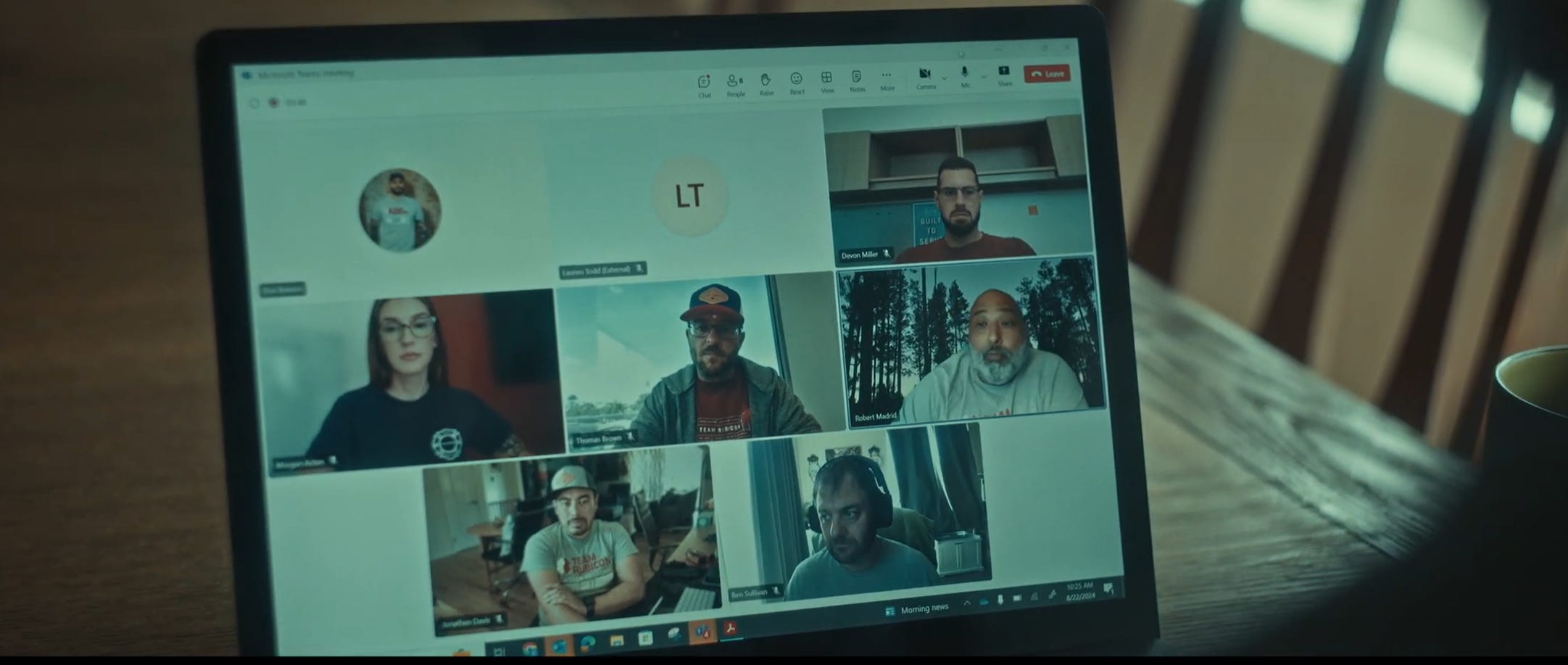
I literally heard Don coach once: Your ego is not useful here; Your team is. In the field, he has to rely on medical leads, logistics coordinators, local partners, community elders… all the people with knowledge and skills he doesn’t have. His job isn’t to be the expert on everything. It’s to create the conditions where expertise can flow.
In organizations, the same rule applies. Crises cannot be solved by one person. You need:
your staff
your board
your donors and funders
your community partners
Your beneficiaries
Your family and friends
People whose expertise you trust even when you don’t fully understand it.
Some leaders crumble in crisis because they tighten control. They fear that if they are not the center of every decision, they are failing. But the best leaders know their job is to clear the path so others can do their best, most essential work.
I remind myself of this constantly in interim roles. My job isn’t to be indispensable… it’s to build capacity so the organization doesn’t need me at the center. From day one, I’m thinking about my last day.
You are responsible for the team. You are not responsible instead of the team.
Shortcuts to failure:
Hoarding decisions
“If I want it done right, I must do it myself” thinking
Assuming leadership means being alone
Taking credit instead of distributing it
Failing to communicate roles and expectations
How to get it right
Know your Role. Your job in a crisis isn’t to be the hero…it’s to clear obstacles, set direction, and create the conditions for others to lead well. Collaboration works when leadership is shared, not centralized.
Help others know their role. Ambiguity is expensive in a crisis. Make sure every person knows what they own and what authority they have to act.
Delegate For Real. I’m not just talking about tasks but ownership. Give people real responsibility and the authority to make decisions within their domain.
Normalize Upward Feedback.. Make it explicit that you expect people to speak up: “If you see something I don’t, tell me.” The team becomes smarter and safer when truth flows in every direction.
Celebrate and Uplift Leadership. Highlight what others contribute, not what you did. Public acknowledgment builds confidence and shared ownership.
Plan for your Exit. Heroic leaders stay indispensable; real leaders build systems where they’re no longer needed at the center. From day 1, you should be thinking about your last day, and how to ensure your team will be able to stand up without you.
Don and I have discussed this at length and agree: “Leadership is the legacy you leave behind. If you leave and everything falls apart, you weren’t actually that effective.”

5. Rest is a Leadership Responsibility
Exhausted leaders make worse decisions.
Disaster response is grueling…. physically, emotionally, spiritually. The nonprofit sector is no different. And we are wiling to do this work because we care, not because it enriches us, and will go the extra mile for that very reason. However if left unchecked, that passion can accelerate burnout.
This final point isn’t about self-care as a nice-to-have. It’s about the unarguable fact that fatigue degrades everything (judgement, patience, strategic thinking, kindness, etc).
My partner has rituals he protects fiercely: running, two square meals a day, and a full night’s sleep. Non-negotiables. Without them, he can’t lead effectively. He’s learned that the hard way.
I’ve learned my own version of this. I need good sleep and real meals (the basics.) But I also need time alone in my thoughts: a warm shower, meditation, space to be creative. My writing and art aren’t hobbies I squeeze in when there’s time… they’re how I process and reset. And time with family and friends isn’t optional. It’s what keeps me human when the work gets heavy.
…But it’s not just about me. Part of my job as a leader is making sure the people around me are pacing themselves too. That means building systems that reduce overwhelm and normalize rest as part of performance. Great leaders need to model that you can step away without the world ending.
You can be better than this:
Wearing exhaustion as a badge of honor (its not).
Overworking because “the mission matters”
Skipping meals, rest, or decompression
Assuming you can push through indefinitely
Believing burnout as a normal part of leadership
How to get it right
Know What Fills Your Cup. Not everything that looks like rest actually restores you. Get specific about what replenishes your energy and protect/prioritize it.
Schedule Rest. For you & Staff. Block recovery time on your calendar. Build a buffer after emotional conversations. Create “off hours” and honor them.
Audit the patterns. I’ve worked with teams so dug into overwork that they didn’t even see it anymore. Sometimes that means auditing PTO usage and encouraging chronic under-users to take time. Sometimes it means investigating why people are overworked and redistributing the load. Surface the patterns so you can interrupt them.
Visibly Model & Encourage. Don’t just sign off for the weekend: tell your team you’re signing off. Encourage them to do the same. And don’t contact them during their off hours. If you say rest matters but you never rest, they’ll follow your behavior, not your words.
De-urgency-ify your work. Not everything is an emergency. Frankly, for most of it, almost none of it is. Part of your job is helping the team distinguish what’s truly urgent from what just feels that way.
Build in Reflection. It is so easy to solve one problem and jump into the next. Make sure to build in opportunities to reflect together, celebrate.
…Its ok to Surge Sometimes you have a deadline and you need to push hard. You might work overtime for a big project. That’s real. But as a leader, build the rest on the backside and communicate it: “We’re going to push hard through this launch, and then we’re taking a breath.” And then actually have a real break.
Don once told me: “Being able to do your job confidently, with energy, while making it look easy … that signals mastery.” There’s something to that. For those of you new to your leadership role… If you’re visibly exhausted and grinding all the time, people will appreciate your effort… but they won’t want to burden you with their thoughts or problems. You’ll miss out on real insight, and the opportunity for partnership with your team.
Rest is the ultimate prerequisite for exceptional leadership.
Final Thoughts
Leading well in a crisis isn’t about being the smartest person in the room or the one who works the hardest. It’s about steadiness. Knowing when to listen and when to decide. Staying curious, sharing the load, and protecting your capacity for the long haul.
These five lessons have shaped how I lead and came from watching someone do extraordinary work in the hardest circumstances imaginable.
And if you’re in the thick of it right now … leading through uncertainty, trying to hold things together while everything feels like it’s shifting… know that you’re not alone. The work is hard. But you can do hard things. And you don’t have to do them by yourself.
Don Beeson is an amazing human who is doing tremendous good in the world. He’s currently taking a bit of a break and exploring what might come next … and frankly, you want him on your team. Whether it’s disaster response, crisis leadership, or operations in high-stakes environments, he brings a rare combination of calm, competence, and heart.
» Connect with Don on LinkedIn or his website
» Check out his interview with Oakley!
Been in non-profit and foundation leadership roles around the country for 35 years. Very poor places and very rich places. Most nonprofit and leadership advice isn't real- not meant for users. More for peers and purchasers. BUT- I found this piece to be an outlier. Real stuff. Particularly germane- Dodge These Dynamics and How To Get it Right. The lack of curiosity is the downfall of many/most non-profit and foundation leaders. Be genuine in trying to learn and you are much of the way there.